

Last update September 18, 2026
Overview
Most independent brands hit the same ceiling: direct-to-consumer sales grow only as long as you keep paying for traffic, and every order is won one shopper at a time.
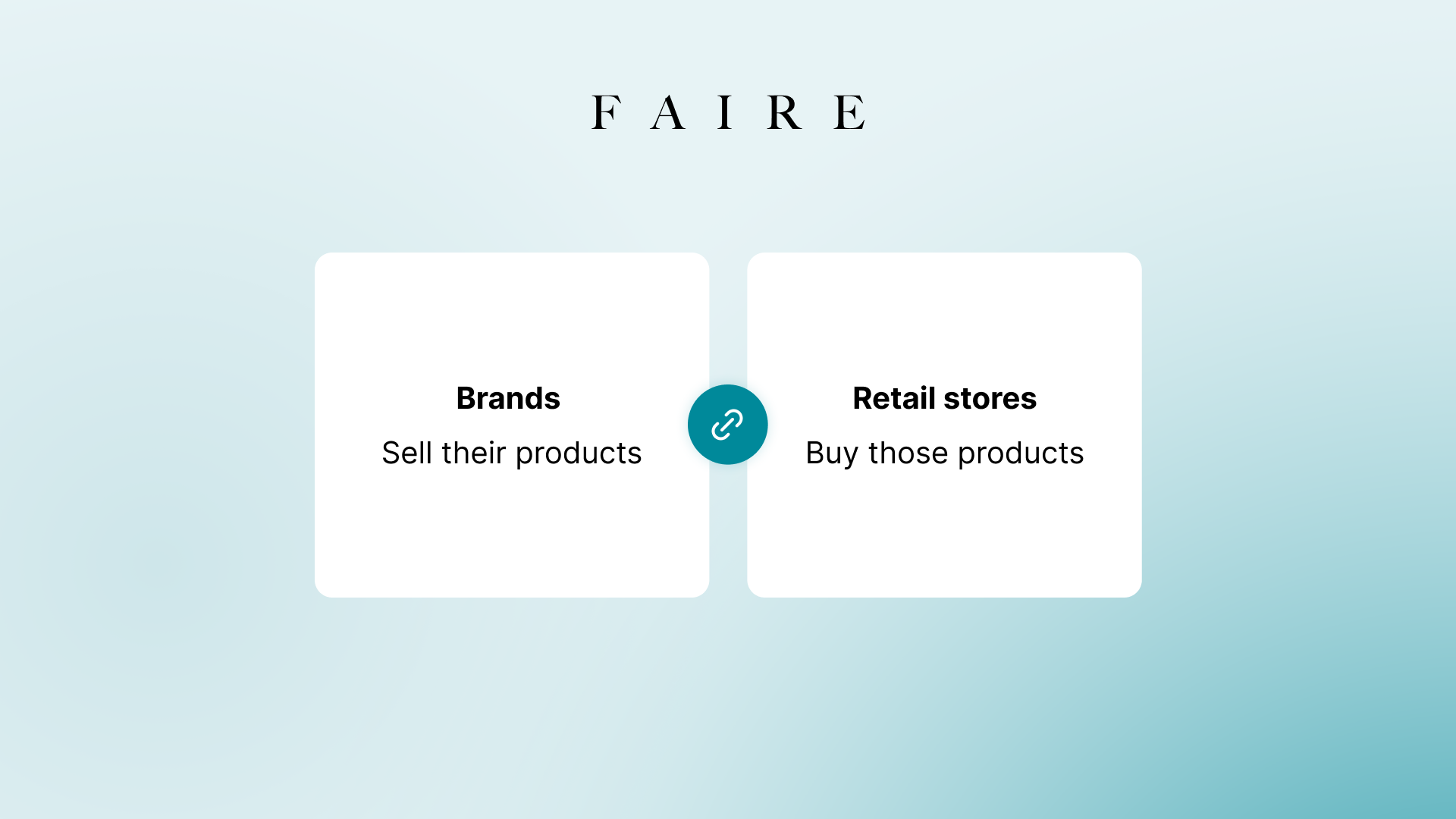
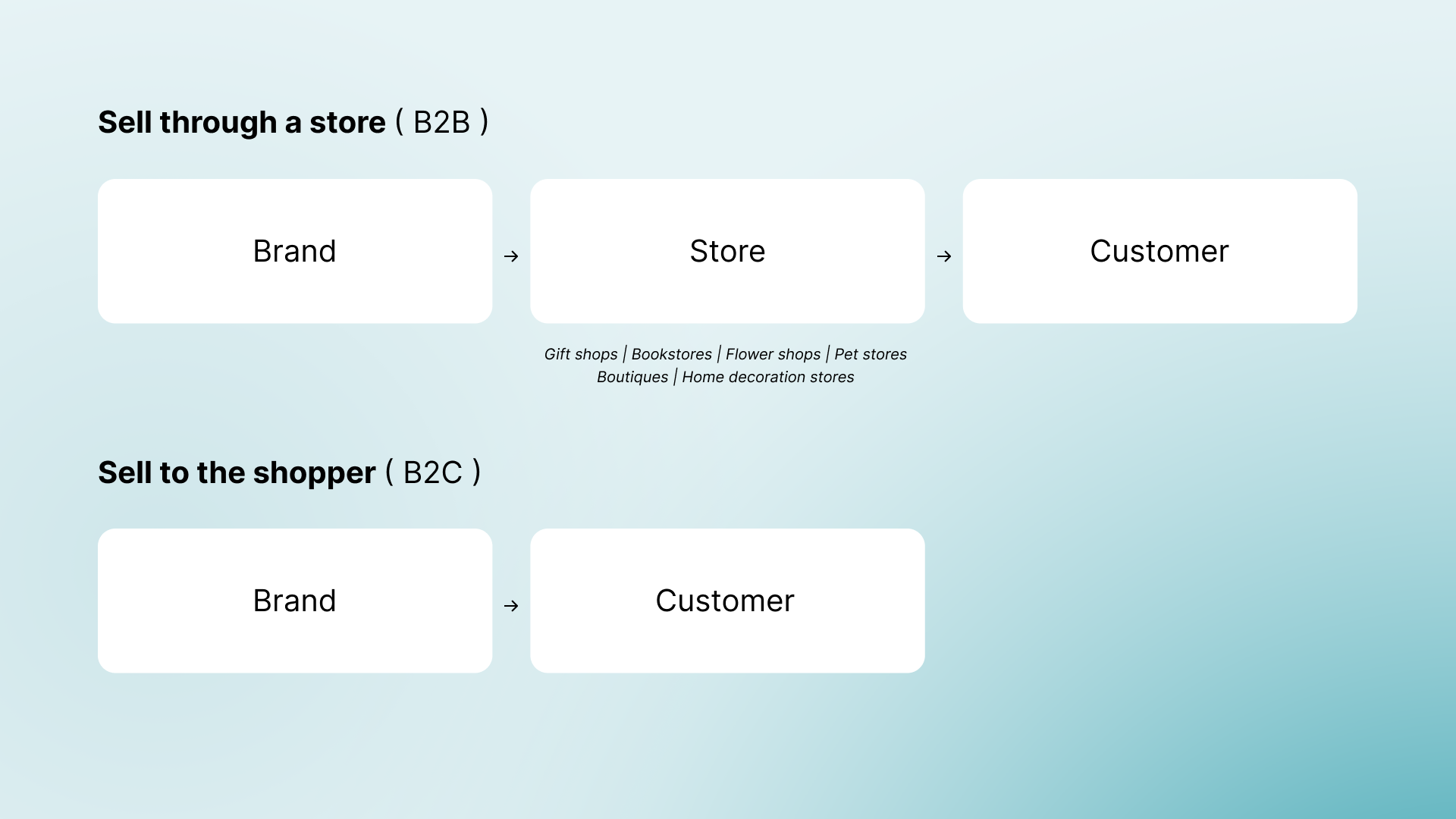
Wholesale changes the arithmetic. One retailer orders what fifty consumers would buy, reorders next season, and does their own marketing to sell it through. That is why Faire, the B2B marketplace where retail stores source independent brands, has become the fastest way into wholesale for brands that have never sold to a shop.
What stops most of them is not ambition but the second catalog: wholesale prices, minimum orders, case sizes and a separate stock figure to keep alive. Nembol removes it — the products you already sell online go to Faire with wholesale terms applied, on one inventory shared with every other channel.
Why brands move into B2B wholesale?
Retail and wholesale are not competing strategies. They pull different levers:
- Order size. A wholesale order carries a minimum quantity, and often a full case. One order is worth a long run of single sales.
- Repeat revenue. A store that sells through reorders on its own schedule. Consumer sales rarely repeat that predictably.
- Distributed marketing. Every stockist puts your product in front of their own customers, in a physical space you did not pay for.
- Lower acquisition cost. On a wholesale marketplace, buyers arrive by browsing categories rather than by clicking an ad you funded.
- Forecasting. Retailers buy ahead of a season, which tells you what to produce before you have to produce it.
The trade-off is margin per unit: a wholesale price is well below retail, and the volume has to make up for it. That is exactly why the operational cost of running the channel matters so much — margin lost to manual work is margin you never see again.
Is B2B business still good in 2026?
The answer is in the gap between two numbers: B2B sales overall are flat, while B2B sales placed online are growing at double digits. Buyers are not spending much more — they are moving where they spend.
1. Digital Commerce 360, US B2B sales figures, January 2026. 2. Faire Newsroom, November 2025. 3. About Faire. 4. Faire press release, June 2026. Figures checked in September 2026.
Two things follow for a brand deciding now.
- The channel shift is the opportunity. A flat market that is reorganising rewards whoever is present where the buying moves, not whoever waits for demand to return.
- Marketplaces are how independent retail buys. Store owners source the way consumers shop: browsing, comparing, ordering online — which is why a wholesale marketplace is a faster entry than building a sales rep network.
The honest caveat: independent retail buys carefully. Opening orders are cautious, buyers test a brand with a small selection before committing, and the brands that grow are the ones that are easy to reorder from — in stock, consistent, and quick to confirm a shipment.
That is a logistics problem more than a sales problem, and it is the part you can actually control.
What is Faire and how does it work?
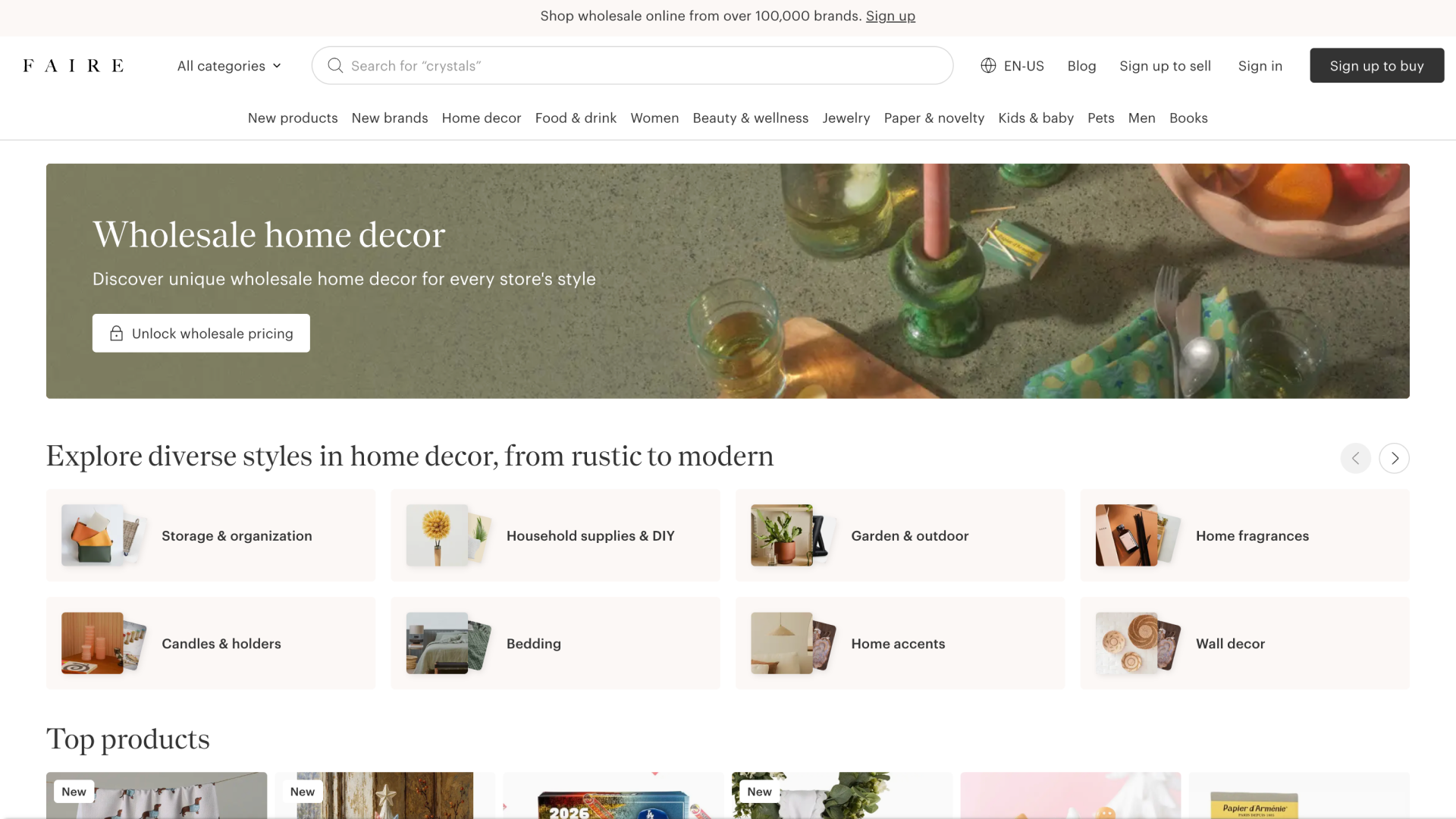
Faire is an online wholesale marketplace that connects independent brands with retail stores. Brands publish a wholesale catalog, store owners browse it the way a consumer browses a retail marketplace, and orders are placed, paid and tracked through the platform.
Some of what makes it different from a B2C marketplace:
- The buyer is a business. Boutiques, gift shops, concept stores, garden centres, pharmacies, cafés — buying to resell, not to consume.
- Two prices on every listing. The wholesale price the retailer pays, and the retail price (MSRP) they are expected to charge. The trade standard is keystone pricing, where retail is double wholesale.
- Minimum orders. Each product carries a minimum order quantity, and a unit multiplier that defines how many units make a case or pack.
- Terms handled by the platform. Faire verifies retailers, offers them payment terms and free returns on opening orders, and pays the brand on its own schedule — so the brand is not underwriting the retailer’s credit.
- Categories built for independent retail. Home, gift, food and drink, beauty and wellness, apparel and accessories, kids, pets, stationery.
For the brand, the model is straightforward: you publish, a retailer discovers you, you ship the order, and Faire handles the payment and the relationship infrastructure in exchange for a commission on marketplace orders.
What are the requirements to use Faire?
Faire is not an open marketplace. Brands apply and are reviewed before they can sell, and the platform is explicit that applications are assessed on a mix of factors, including:
- the supply and demand in your product category
- where the brand is based
- the type of product
- the number of SKUs in the catalog
- how established the business is, whether it already sells wholesale, and its social media presence
Beyond approval, there are practical requirements every listing has to meet:
- A wholesale price and a retail price on every product
- A minimum order quantity and a unit multiplier (set it to 1 if retailers may buy single units)
- A category from Faire’s own taxonomy
- A unique SKU on every product and every variation — Faire requires SKUs to be unique across the whole brand and rejects duplicates
- At least one image, with up to 20 in the product gallery plus images on variations
- Optionally, the HS or tariff code, used on cross-border orders
One detail worth knowing before you publish: on Faire, the variation structure is fixed once a product is created. Option names and values cannot be renamed, added or removed afterwards — changing them means removing the listing and publishing it again. Get sizes and colours right the first time.
How do I open a Faire account?
The path is short, and most of the work sits before and after it rather than during:
- Apply as a brand on Faire, with your brand details, categories, pricing and minimum order requirements. Applications are reviewed in the order they are received — see Faire’s own How to get started on Faire.
- Build the brand profile: your story, your logo, the imagery a buyer sees before they see a product.
- Set your wholesale terms: wholesale prices, MSRP, minimum order, case size, lead times.
- Publish the catalog, with clean SKUs and correctly structured variations.
- Connect your other sales channels, so stock and product data stay aligned from day one rather than after the first oversell.
Faire’s full documentation for brands lives in its Help Center for Brands, and the commercial terms in the Brand Terms of Service.
How much does it cost to use Faire?
There is no subscription to have a shop on Faire: the platform earns a commission when it brings you a customer. The structure differs by region, so check the page that applies to you.
Brands based in North America (official page):
- 15% commission on orders from retailers who found you through the Faire marketplace, on first orders and reorders alike
- a $10 new customer fee, once per retailer, on their first order
- a payment processing fee of roughly 1.9% to 3.5% plus a fixed per-transaction amount, depending on how quickly you choose to be paid out
Brands based outside North America, including the EU and the UK (official page, and the EU and UK pricing policy):
- 15% commission on reorders from the Faire marketplace
- a one-time 10% referral fee on top of that 15% when a customer first discovers you on Faire, so the opening order from a new retailer is charged at 25%
- the 24-hour rule: an order counts as a reorder only if it is placed at least 24 hours after the first one. A second order inside that window is charged at 25% as well
- replacement orders are charged at the same rate as the original order
Faire Direct: 0% commission. Retailers you bring to the platform yourself, through your personalised Faire Direct link, order commission-free. The details are in Faire’s Faire Direct commission policy.
That last point is the one brands underestimate. Faire is a customer acquisition channel at 15%, and an order management system at 0% for the stockists you already have. Moving your existing wholesale accounts onto your Faire Direct link turns the platform into free infrastructure for relationships you built yourself.
Fees change. The figures above reflect Faire’s published pricing pages at the time of writing — always confirm on the Faire page for your region before you model your margins.
How much does Faire charge for shipping?
Shipping is not a platform fee, it is a cost you can either hand to Faire or keep:
- Ship with Faire. Available to brands in the US, Canada, Australia, the UK and European countries. You print labels from Faire’s order fulfilment page, at rates Faire has negotiated with carriers such as UPS, FedEx and DHL, and you pay nothing upfront — Faire covers the initial cost.
- Ship on your own. Use your own carrier and account, enter the shipping cost and the tracking number on the order, and the amount is reimbursed in your payout.
Either way, the retailer sees the shipping terms before they order, and tracking has to reach Faire for the order to be complete. Details are in Faire’s Fulfilling and shipping documentation.
How to sell on Faire without building a second catalog?
Here is the practical problem. Your products already exist — on your website, on Shopify or WooCommerce, on Etsy, on Amazon or eBay. Faire needs the same products with different terms attached, a different price, and a stock figure that has to agree with everywhere else you sell.
Doing that by hand is where wholesale projects stall.
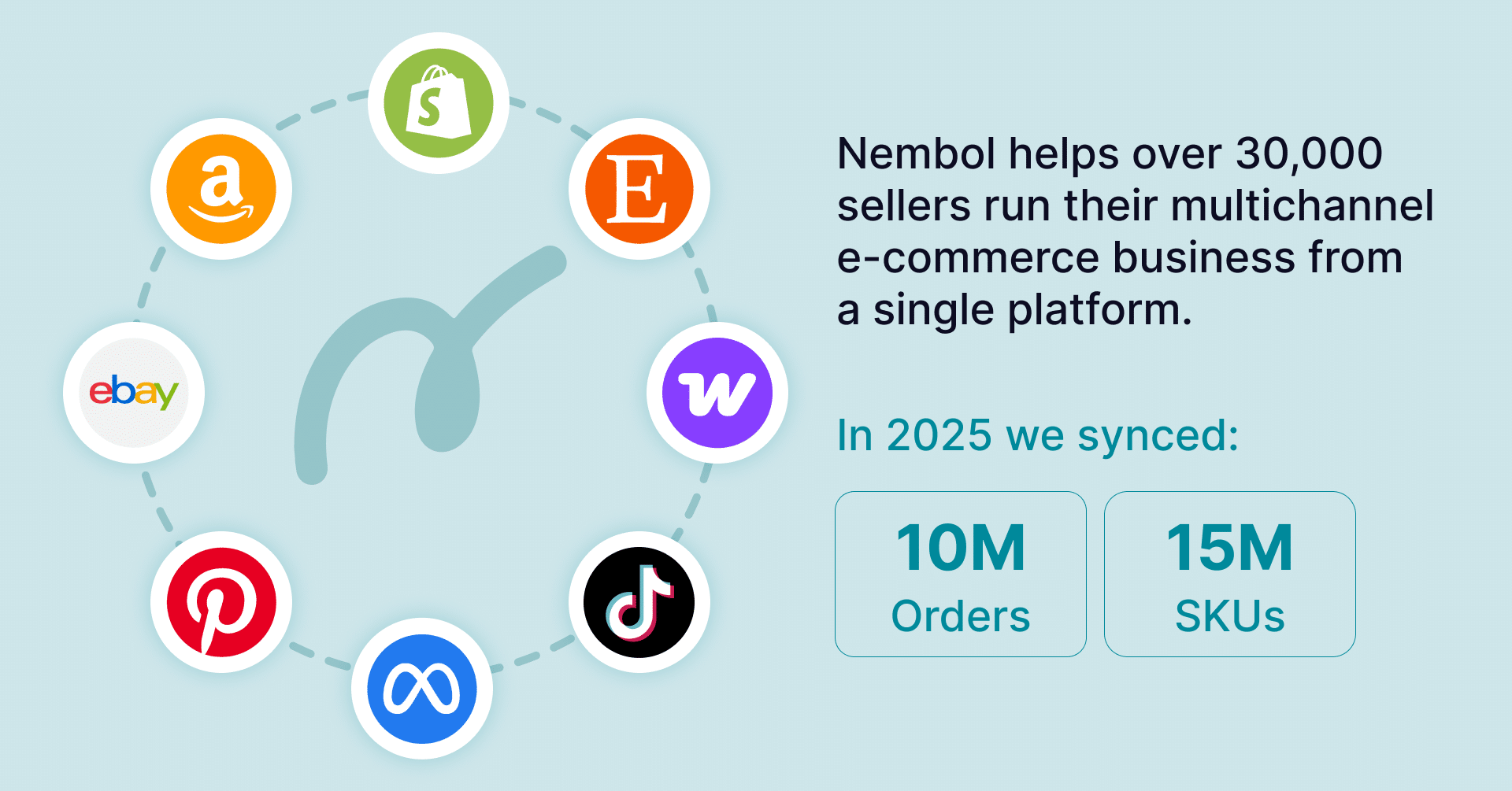
Nembol is multichannel listing and inventory software that connects Faire to more than 15 other sales channels through one catalog. For a brand opening B2B, that means:
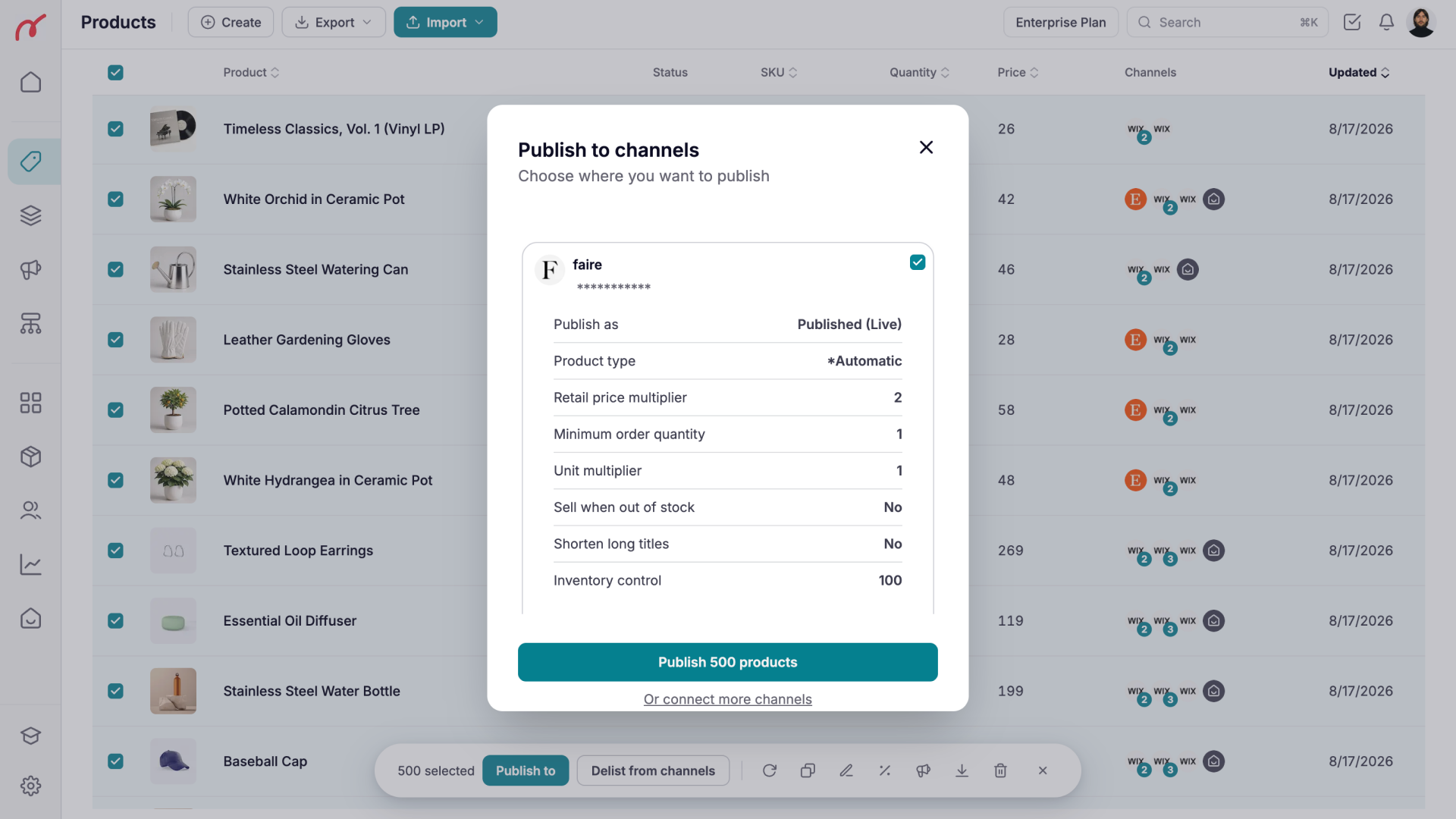
- Publish to Faire from what you already sell. Titles, descriptions, images, variations, SKUs and attributes travel with the product, in bulk or one at a time.
- Wholesale pricing calculated, not maintained. A percentage or fixed-amount rule turns your catalog price into the wholesale price; a retail multiplier — keystone, ×2, by default — produces the MSRP. No second price list.
- Wholesale terms in the catalog. Minimum order quantity and units per case are set in Nembol and travel with every listing.
- One inventory behind every channel. A wholesale order on Faire lowers your stock everywhere else, and a retail sale lowers your Faire listings — the protection that matters most when a single order takes a case.
- Orders and shipping in one place. Faire orders are imported automatically, and tracking number and carrier go back to Faire from Nembol when you ship.
- Wholesale promotions. Schedule a discount with a start and an end date: Nembol lowers the wholesale price for that period and leaves the MSRP in place, so the retailer sees a genuine cut on what they pay and your original price is restored automatically.
The strategic point is not the time saved. It is that wholesale stops being a decision. When Faire is one more channel fed by the same catalog, you can test B2B with twenty references instead of committing to a separate operation — and if it works, scale it without adding headcount.
Try Nembol free for 14 days No credit card required
Do you have to have a website to sell on Faire?
No. You can be approved and sell on Faire without a website of your own.
You will want one anyway, and not for vanity. A buyer who finds you on Faire almost always looks you up before placing an opening order, and what they find is part of the decision:
- Does the brand look like it will still exist next season?
- Is the assortment coherent, or is Faire a clearance shelf?
- Is the retail price on the brand’s own site consistent with the MSRP I am being asked to charge?
That last question is the one that kills orders. A store will not stock a brand that undercuts them on its own website.
Nembol Storefront solves it from the catalog you already have. It generates a complete ecommerce website — product pages, cart, checkout with Stripe or PayPal, shipping rules, About, Contact and legal pages — on your own custom domain, with no code and no second catalog to maintain.
For a brand selling on Faire, that means:
- A credible destination for the buyer who searched your name after finding you on the marketplace
- Consistent pricing, because the retail price on your site and the MSRP on Faire come from the same product
- Full-margin sales, direct to consumers, with no marketplace commission on the order
- One inventory, shared between wholesale orders and direct orders.
Frequently asked questions
Do I need to already sell wholesale to join Faire?
No, but it helps your application. Faire reviews each brand and looks at your category, your location, your product, the size of your catalog and how established the business is — existing wholesale experience is one signal among several.
How long does approval take?
Faire reviews applications in the order they are received and does not publish a turnaround time. Use the wait to clean up SKUs, images and variations, so you can publish the day you are approved.
Can I sell on Faire and keep my own shop and marketplaces?
Yes, and most brands do. The two audiences are different — consumers on your own channels, stores on Faire — and the only thing that has to be shared is the stock figure behind them.
Can I use Faire for dropshipping?
No. Faire is a wholesale marketplace: retailers buy inventory, pay for it, and resell it in their own shop. Brands ship to the retailer, not to the retailer’s customer, and the platform’s terms are written around that relationship — see the Retailer Terms of Service. If you are looking for a supplier who ships single units to your buyers on your behalf, Faire is not that channel.
What is Faire Direct?
It is your personalised link for retailers you bring to the platform yourself. Orders placed through it carry 0% commission, which makes Faire usable as order management for the stockists you already had before you joined.
Do I need a VAT number to sell on Faire?
Only if your own country requires one of you. In the EU you can declare that you have no VAT number if you are below the registration threshold; in the UK it is required of businesses with a warehouse, shop or office there.
How do I keep my stock aligned between Faire and my other channels?
With Nembol: a wholesale order on Faire lowers the quantity everywhere else you sell, and a retail sale lowers your Faire listings. It matters more here than on any retail channel, because one wholesale order can take a case.