Last update September 7, 2026
Overview
Adding a country to an ecommerce business usually costs more than it returns in the first year: a new account, a new integration, new operations. Kaufland Global Marketplace is the exception — one registration and one monthly fee put your catalogue in front of buyers in nine European countries, and Nembol cross-lists it there from the catalogue you already run on Amazon, eBay, Shopify and more.
This guide covers what Kaufland is, whether it can be trusted, what it costs, and how to turn nine storefronts into revenue without rebuilding your catalogue for the tenth time.
What is Kaufland Global Marketplace?
Kaufland Global Marketplace is the online marketplace of Kaufland, a European retail chain with around 1,600 physical stores across eight countries. That is the first thing to understand about it: sellers are joining an established high-street retailer that moved online, not a marketplace built from scratch.
The marketplace is open to third-party sellers across more than 6,400 categories, from consumer electronics and household appliances to garden, DIY, sports and home furnishings.
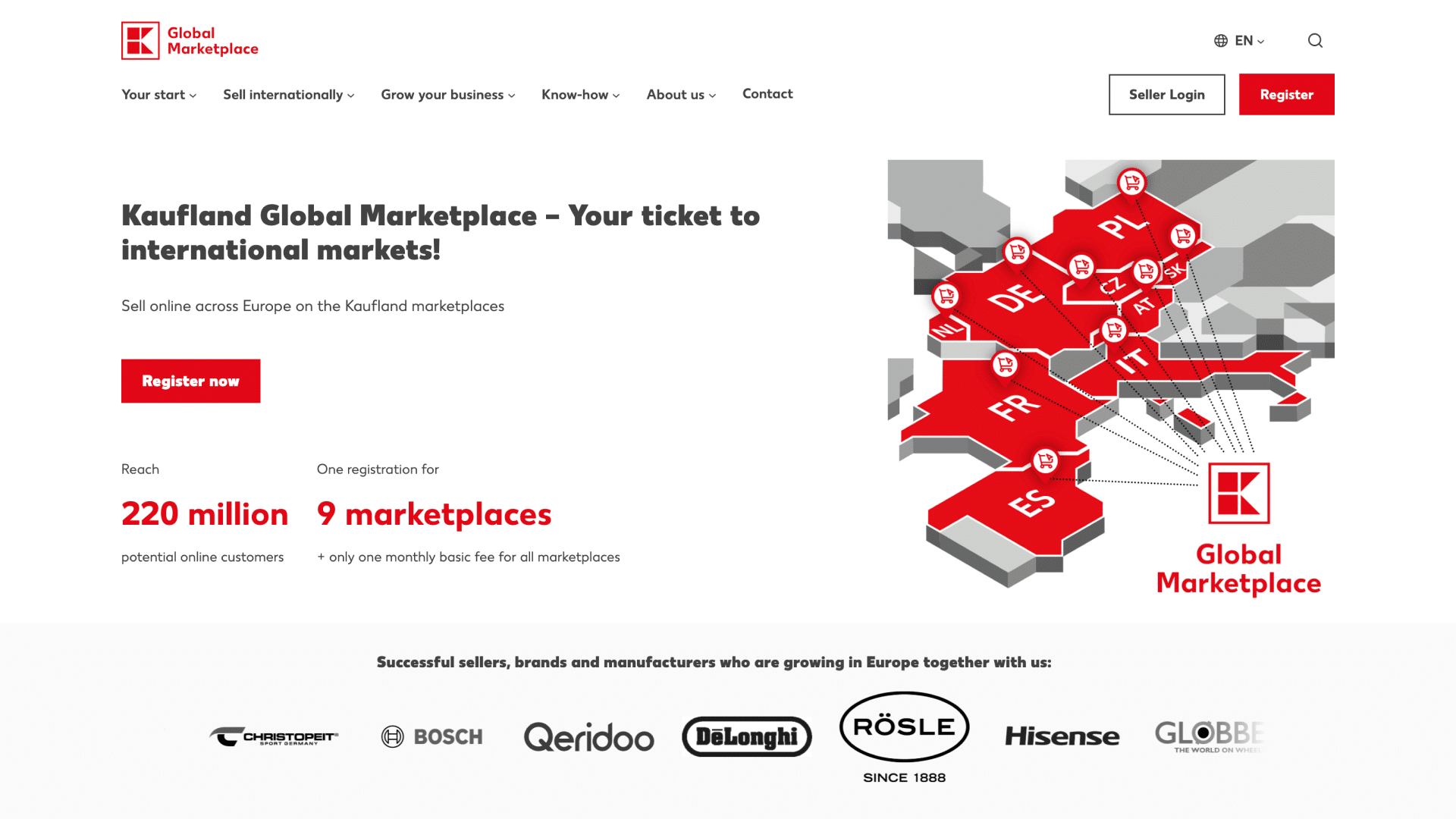
The feature that matters most for sellers is the single-registration model. One seller account and one monthly fee give access to nine European marketplaces:
- DE Germany
- AT Austria
- CZ Czech Republic
- SK Slovakia
- PL Poland
- FR France
- IT Italy
- NL Netherlands
- ES Spain
Kaufland runs a catalogue model built around GTINs. List a product whose barcode already exists and your offer is attached to that product page next to other sellers, creating price and service competition rather than duplicated listings. Products not yet catalogued create a new entry, reviewed before it becomes visible.
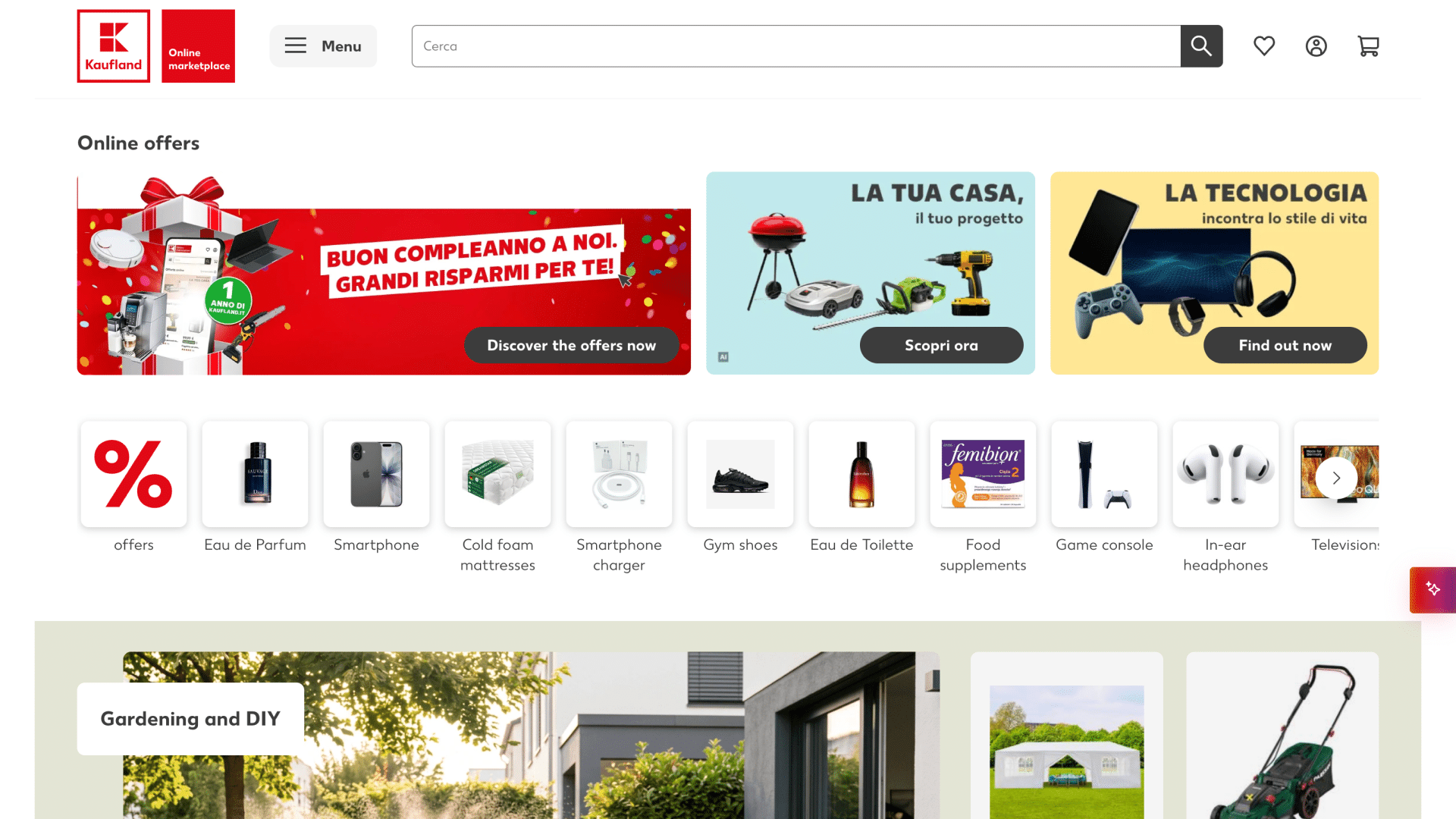
Kaufland Global Marketplace at a glance
* Figures published by Kaufland Global Marketplace on kauflandglobalmarketplace.com, checked in September 2026.
Is Kaufland marketplace legit?
Yes. Kaufland is an established European retailer with around 1,600 stores in nine countries, and the marketplace is its own online business rather than a third-party venture using the name. Sellers are contracting with a retail company that has to protect a high-street brand, which is a different proposition from a marketplace with nothing offline to lose.
The commercial terms point the same way. The fee structure is published openly, listing is free and unlimited, and commission is charged only on completed sales — not on returns or cancellations. Subscriptions can be cancelled at any time, so testing the channel does not require a commitment.
More than 15,000 sellers are already trading on the platform, and Kaufland requires a registered business with valid VAT registration in the markets served, which keeps casual and non-compliant listings out.
How much does it cost to sell on Kaufland?
Selling on Kaufland is not free. The platform combines a subscription with a category-based commission, and the subscription is charged whether or not you sell.
* Fees published by Kaufland Global Marketplace on kauflandglobalmarketplace.com, checked in September 2026. Prices exclude VAT and are subject to change.
Both plans cover all nine marketplaces under a single fee, and the Plus plan adds a €30 monthly credit for Sponsored Product Ads. Commission is calculated on the gross sales price including delivery and VAT, and varies by category and marketplace: computers and consumer electronics sit at the low end, around 7%, while clothing and jewellery sit considerably higher, at 14% and 16%. Polish rates run lower than the other markets — 4%, 10% and 12% on the same three categories. Commission is charged only on completed sales, not on returns or cancellations.
The practical implication is that Kaufland rewards volume. A fixed subscription is a meaningful percentage of revenue for a seller doing a few hundred euros a month and a rounding error for one doing tens of thousands. Model the break-even before onboarding: at what monthly turnover does the subscription stop being material against the commission you save elsewhere. For catalogues in the lower commission bands, that threshold arrives quickly.
What you need to open a Kaufland seller account?
The onboarding sequence is short, and it is the same whichever country you start from.
- Register a business seller account. Business registration and valid VAT registration in the markets you intend to serve are prerequisites.
- Set up a warehouse and a shipping group in the Kaufland Seller Portal. No offer goes live without them.
- Prepare your product data. Every offer needs a valid, registered GTIN, a Kaufland category, and an item condition — nine are available, from new to well used.
- Publish your offers through the seller portal, a CSV upload, or the marketplace API.
- Fulfil and keep your performance clean. Cancellations, late shipments and slow replies cost visibility on a marketplace where several sellers share a product page.
The API route is the one growing sellers take, because it is what multichannel software connects to. Re-typing a catalogue that already lives on Amazon, eBay or Shopify is the slowest possible way to open a channel — and data preparation, not the platform itself, is where most sellers stall.
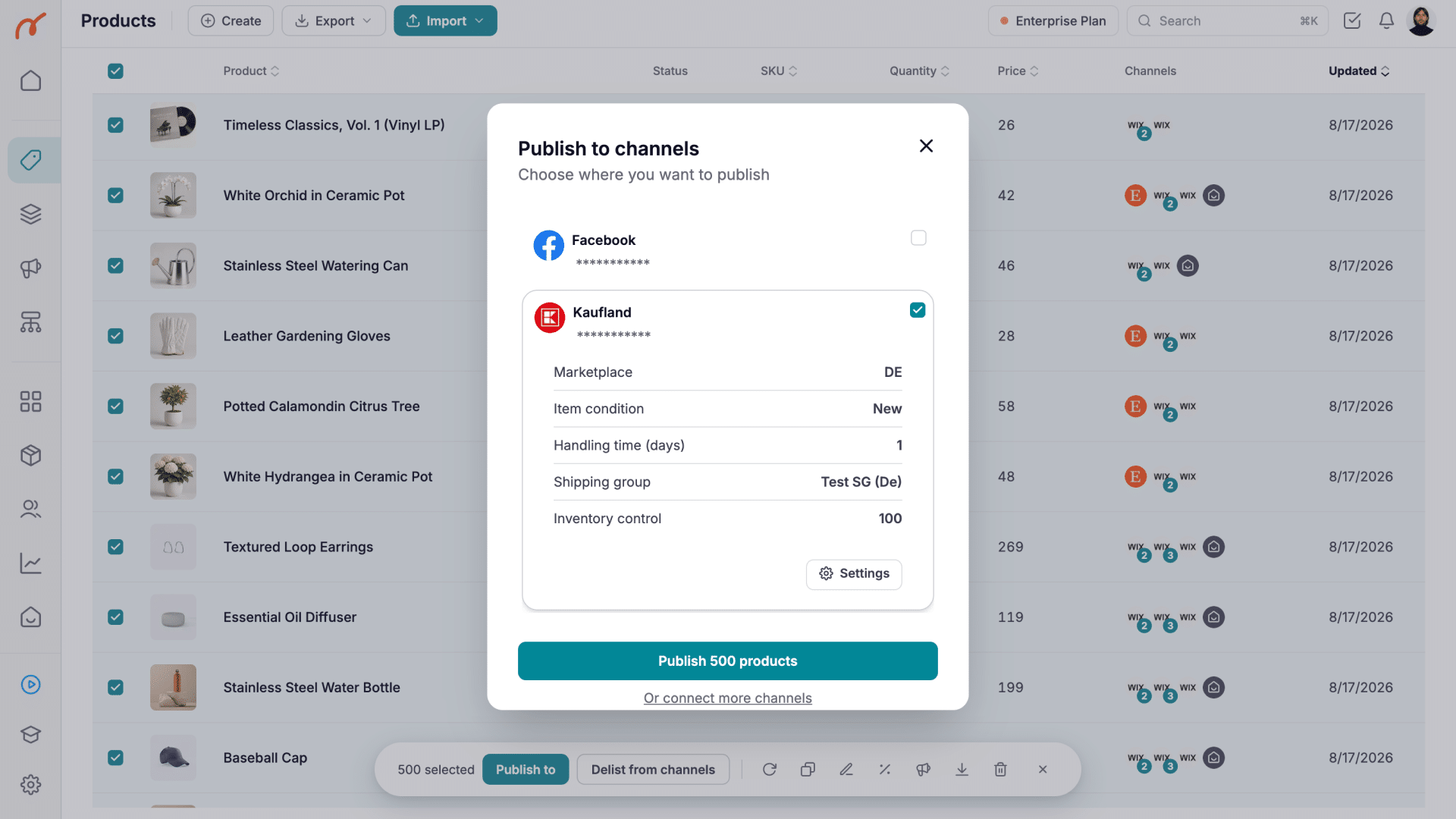
How to cross-list on Kaufland from your other sales channels
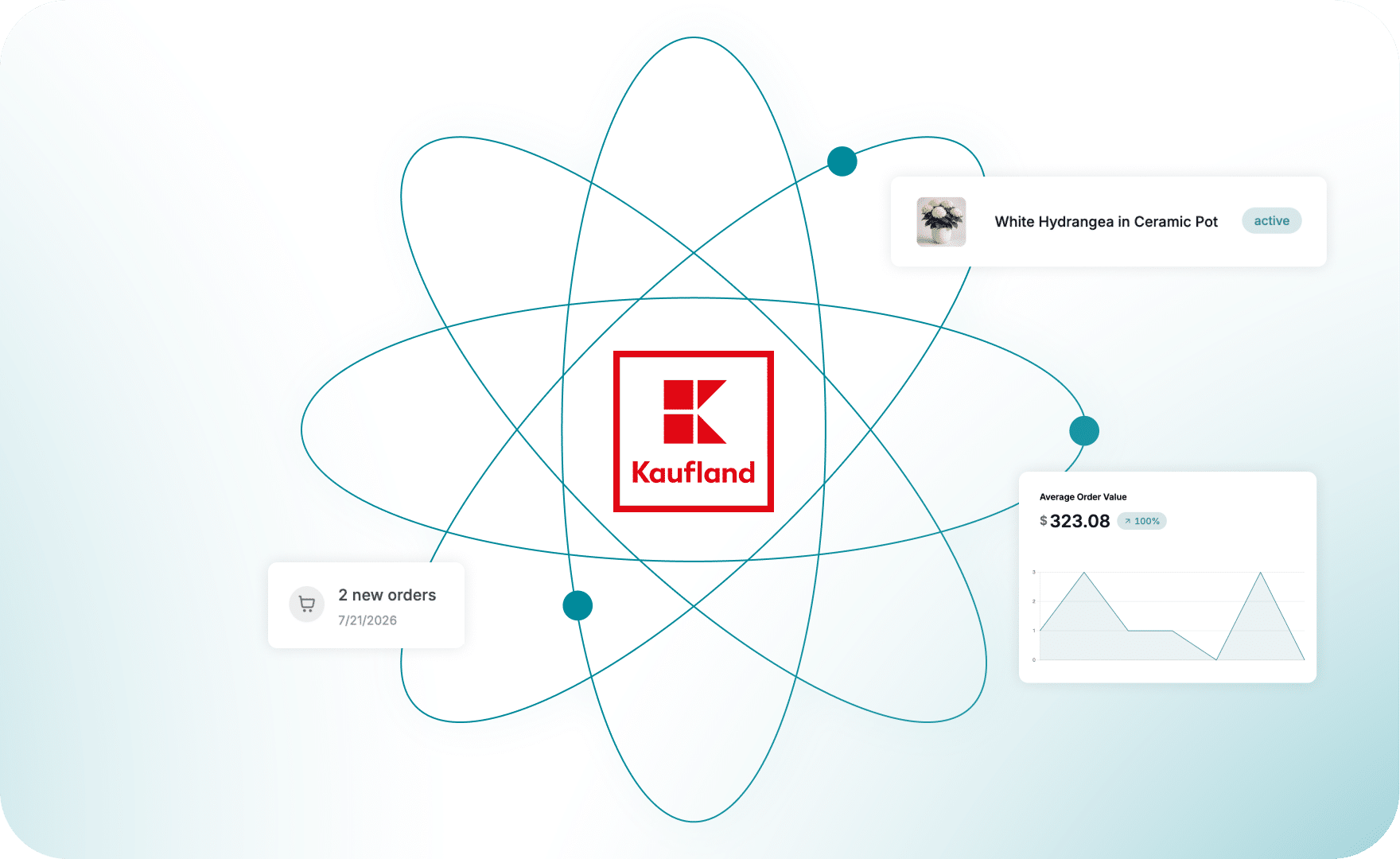
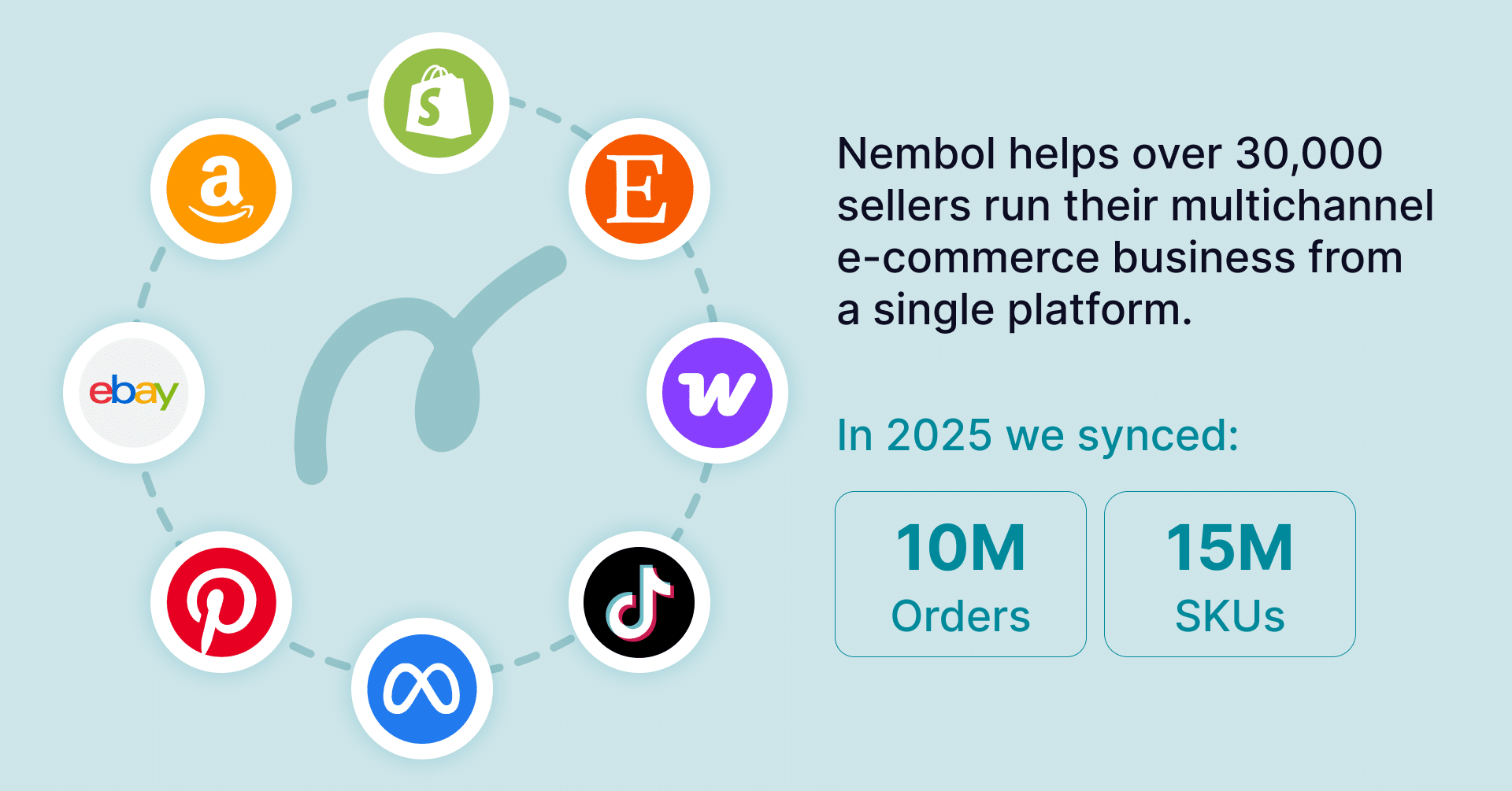
Nembol connects Kaufland through its official API and runs it as one channel inside a multichannel workflow, not as a separate back office. If you already sell on Amazon, eBay, Etsy, Shopify, Wix, Squarespace, Square, WooCommerce, TikTok Shop, OnBuy or Google Merchant, the catalogue you use there is the catalogue that opens Kaufland.
- Cross-listing from your existing catalogue. Publish to Kaufland individually or in bulk. Nembol validates the GTIN, matches the category and applies your warehouse and shipping group.
- Import what you already sell there. Existing Kaufland offers come into Nembol filtered by marketplace, listing state and stock quantity.
- Two-way multichannel inventory sync. A sale on any channel lowers your Kaufland stock, and a stock change made on Kaufland flows back and out to every other channel in real time. This is the protection against overselling when one stock pool faces nine storefronts.
- Orders and shipping in one place. Kaufland orders import with customer, address and line items; mark an order shipped and the carrier and tracking number go back to Kaufland.
- Native Kaufland promotions. Create discount vouchers, percentage or fixed, without leaving Nembol.
- Per-channel price rules. Absorb a 16% commission band on one marketplace without touching the price lists of the others.
- Catalog Checkup. Flags missing GTINs and incomplete product data before Kaufland rejects the offer.
One platform limit is worth knowing before you plan the assortment: Kaufland allows one offer per barcode, so a multi-variant product publishes as one Kaufland listing per variant, each with its own registered GTIN.
Try Nembol free for 14 days
No credit card required
Why Kaufland is worth adding to your multichannel strategy
For sellers already on Amazon, eBay, Shopify, Wix, Etsy, TikTok Shop or WooCommerce, Kaufland is a complementary channel rather than a replacement — and one that returns more than most for the effort of connecting it.
- An outlet in nine countries at once. One integration, and the catalogue you sell in one market is on sale across Central and Western Europe.
- A retail name does the trust work. Buyers arrive already knowing the shop, which is the hardest part of cross-border selling and the part you normally pay for in advertising.
- Room to be seen. The field of competing sellers is thinner than on the marketplaces you already fight on, so a well-priced offer surfaces faster.
- The long tail costs nothing to publish. Adding more products does not raise the bill, so slow movers can go online next to the bestsellers.
- Revenue stops depending on one platform. An algorithm change on your main channel hurts far less when it is not your only channel.
- No new operating model. The catalogue, the stock and the orders stay where they are. Kaufland becomes one more destination for them.
Get the barcodes and the EU paperwork in order and the rest is already in place — you are extending a business you run today, not starting a second one.
Frequently asked questions
Which countries does Kaufland Global Marketplace cover?
Nine: Germany, Austria, the Czech Republic, Slovakia, Poland, France, Italy, the Netherlands and Spain. One seller account and one subscription open all of them, and you activate the countries you want to serve. Adding another marketplace costs nothing extra, which is what makes Kaufland unusual among cross-border channels.
Do I need an EAN or GTIN to sell on Kaufland?
Yes. Every offer needs a valid, registered GTIN, and Kaufland allows only one offer per barcode. Its catalogue is built around GTINs: list a product whose barcode already exists and your offer attaches to that product page alongside other sellers; a barcode not yet catalogued creates a new entry that is reviewed before it goes live. Products without a registered barcode cannot be listed at all.
Can I sell product variants on Kaufland?
Yes, but not grouped. Because Kaufland permits one offer per barcode, a product sold in several sizes or colours publishes as one Kaufland listing per variant, each with its own registered GTIN. If your catalogue is structured around parent listings with variations, as on Amazon or eBay, expect it to expand into separate offers on Kaufland.
Can I sell used or refurbished items on Kaufland?
Yes. Kaufland supports nine item conditions, from new through to well used, so second-hand and refurbished assortments transfer without restructuring. The GTIN requirement applies to every offer regardless of condition.
Do I need a VAT number to sell on Kaufland?
Yes. Kaufland requires a registered business and valid VAT registration in the markets you intend to serve. That requirement is part of why the marketplace stays relatively clean — it keeps casual and non-compliant sellers out — but it does mean the paperwork has to be in order before you activate a country, not after.
Does Kaufland charge listing fees?
No. Listing products is free and unlimited across all nine marketplaces. What you pay is the monthly subscription — €39.95 for Basic or €59.95 for Plus, plus VAT — and a commission of 4% to 16% on the gross sale price, varying by category and country. Commission applies only to completed sales, not to returns or cancellations. Because the long tail costs nothing to publish, slow movers can go online next to bestsellers.
Can I cancel my Kaufland subscription at any time?
Yes. Subscriptions run monthly and can be cancelled whenever you choose, so testing the channel does not require a commitment. Note that the subscription is charged whether or not you sell, so it is worth modelling the break-even before you onboard.
How do I upload my products to Kaufland?
Three ways: manually in the Seller Portal, by CSV upload, or through the marketplace API. The API is the route growing sellers take, because it is what multichannel software connects to — retyping a catalogue that already lives on Amazon, eBay or Shopify is the slowest way to open a channel, and data preparation rather than the platform itself is where most sellers stall.
Can I connect Kaufland to Amazon, eBay or Shopify?
Not directly — the marketplaces have no connection to each other, so you need multichannel software in between. Nembol connects Kaufland through its official API and runs it as one channel alongside Amazon, eBay, Etsy, Shopify, WooCommerce, TikTok Shop and others: publish from the catalogue you already have, validate GTINs and categories on the way out, and keep stock synced in both directions so one stock pool can face all nine Kaufland storefronts safely.
Register now and sell more online with Kaufland Global Marketplace! Use the promotional code NEMBOLSTART to sell for 3 months without the basic fee.
Valid until 11 November 2026 and available to new sellers only. Enter the code during registration. Commission fees still apply.