


Overview
Behind every product listing on a marketplace or advertising platform lies a structured stream of catalog data. This data must be continuously updated, formatted according to platform requirements, and distributed across multiple channels without inconsistencies.
Feed management is the operational framework that enables sellers and businesses to govern this process at scale.

What is Feed Management
Feed management is the process of organizing, structuring, optimizing, and distributing product data feeds so that they can be correctly used across multiple digital channels.
In practice, it represents the operational layer that connects a company’s internal product data systems with external platforms such as marketplaces, advertising networks, affiliate channels, and comparison engines. Each of these platforms depends on product feeds to display listings, run campaigns, or synchronize inventory, but each also enforces its own technical rules and data requirements.
For this reason, feed management is best understood not as a single action, but as a continuous data workflow that ensures product information remains usable, consistent, and compliant across all endpoints where it is published.
What is a product data feed
At the foundation of feed management is the concept of a product data feed. A feed is a structured file or data stream that contains all relevant information about a product catalog. This typically includes identifiers such as:
- SKUs or GTINs
- Product titles and descriptions
- Pricing data
- Availability status
- Images
- Category information
- And other attributes required by external platforms
While the structure may vary (commonly XML, CSV, or JSON), the purpose is always the same: to provide a machine-readable representation of a product catalog that can be ingested by external systems.
However, raw product data from internal systems is rarely aligned with external requirements. Each channel defines its own rules regarding mandatory fields, attribute naming conventions, categorization logic, image specifications, and data formatting.
Even small inconsistencies, such as missing attributes or incorrect category mappings, can lead to rejected listings or reduced product visibility.
Feed management addresses this complexity by introducing a structured control layer over product data distribution.

5 reasons Why is Feed Management important
Feed management is important because it ensures that product data can operate effectively in environments where distribution is fragmented, rules are heterogeneous, and updates are continuous. In modern ecommerce, product information is no longer published in a single destination, but propagated across multiple systems that interpret and display that data independently.
Feed management delivers value across several critical dimensions of ecommerce operations, particularly where product data must remain consistent, compliant, and reliable across multiple channels:
1. Data consistency at scale: As product catalogs grow across channels, even small discrepancies in pricing, stock, or categorization can create misalignment between intended and actual product information. Feed management reduces this risk by enforcing structured, repeatable logic across all outputs.
2. Compatibility with external systems: Each marketplace or platform is built on its own technical framework, with specific requirements for attributes, mandatory fields, and category structures. Feed management ensures product data is adapted to these requirements without manual reprocessing for each channel, reducing friction between systems.
3. Operational reliability in dynamic environments: Product data is constantly changing, with updates to inventory, pricing, and new products. Without a controlled process, these changes can propagate inconsistently across channels. A structured approach ensures updates are reflected in a predictable and traceable way across the network.
4. Reduced complexity: Instead of managing separate exports or manual adjustments per channel, a centralized structure defines how product data is transformed and distributed. This reduces duplication of effort and simplifies the management of large catalogs across multiple endpoints.
5. Stronger data governance across channels: As product data becomes a shared asset across different teams and functions, a structured feed management layer introduces control, visibility, and traceability over external data usage, supporting alignment across all stakeholders involved in the process.
What is a Feed Management tool
A feed management tool is a software layer that automates the distribution of product data across multiple external environments in a structured and scalable way.
It sits between internal systems and external endpoints, ensuring that product data is continuously transformed and synchronized according to each destination’s requirements.
Rather than relying on manual exports, it centralizes the process and applies rules that keep product information aligned across all connected channels.
Core capabilities typically include:
- Centralized product catalog management: consolidating product information into a single structured system that can be used as the source of truth for multiple sales channels.
- Multichannel product publishing: enabling products to be listed and distributed across different marketplaces and ecommerce platforms from a single interface.
- Automatic synchronization of inventory and product data: ensuring that changes in stock levels, pricing, or product details are reflected consistently across all connected channels.
- Feed and listing adaptation per channel: adjusting product data to match the specific requirements of each marketplace or sales platform, including formatting, category structure, and required attributes.
- Rule-based automation for listings: allowing businesses to define logic for how products are published or updated across channels (e.g., which products are pushed to which marketplace, or under which conditions).
- Continuous updates and maintenance: keeping product listings aligned with real-time changes in the catalog, reducing manual work and preventing inconsistencies between channels.
When is a Feed Management solution needed
A feed management solution becomes particularly useful when begin to encounter situations like:
- Selling the same catalog on multiple marketplaces or online channels
- Managing a large changing product catalog
- Keeping stock levels, prices, and product information aligned
- Ensuring product listings meet the technical requirements of each channel
- Reducing the operational workload associated with listing management
- Maintaining reliable product information across channels
Nembol as a Feed Management solution
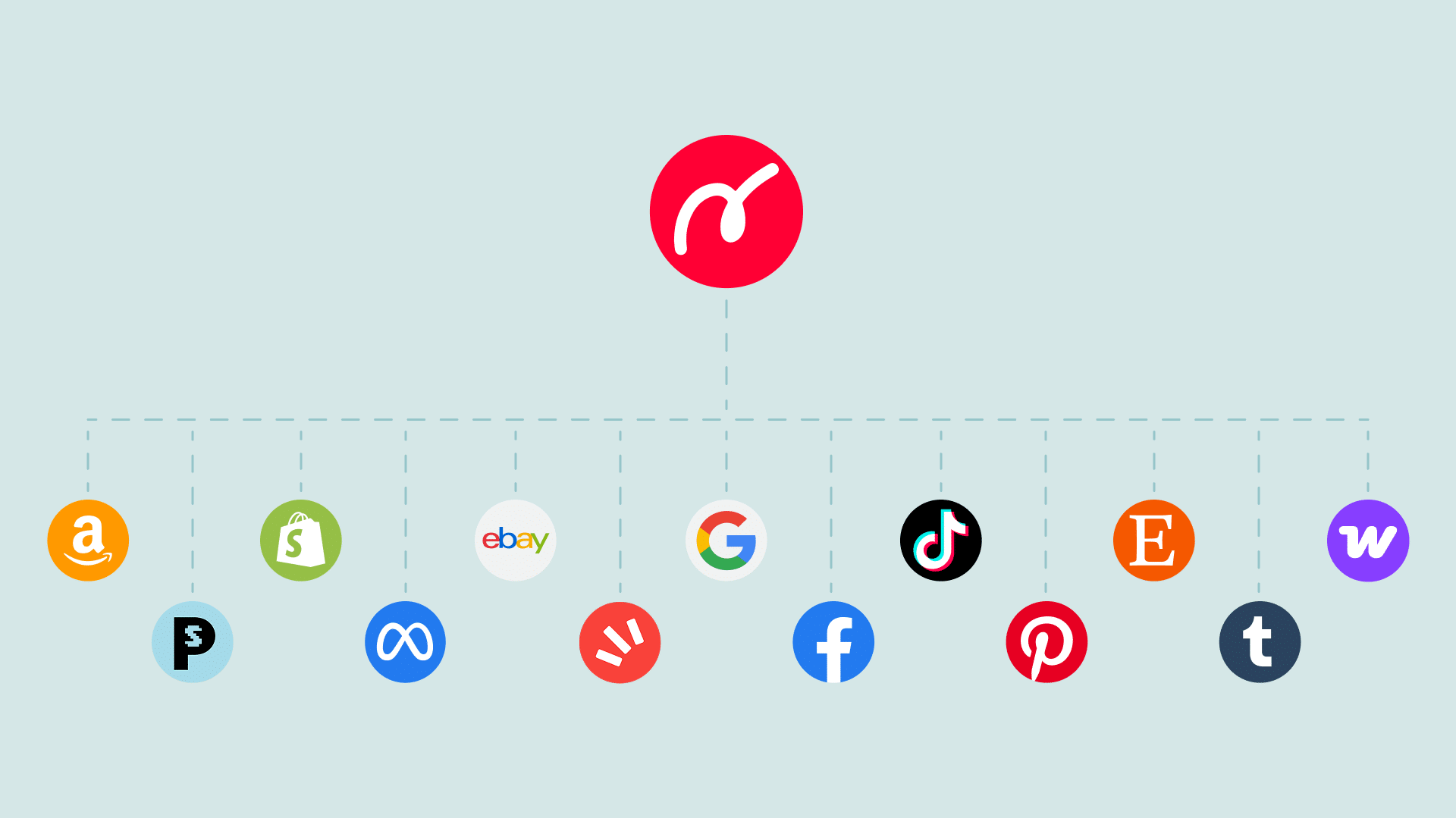
Nembol is a platform for multichannel product distribution, used by individual sellers, ecommerce operators, agencies, and large retail brands.
By connecting a product catalog to multiple sales channels, it enables product listings and updates to be managed from a single operational environment rather than handled separately for each destination.
Within a feed management workflow, Nembol can support activities such as:
- Publishing product listings across multiple marketplaces and ecommerce platforms from a centralized catalog
- Synchronizing inventory levels, pricing, and product attributes across connected channels
- Maintaining consistent product information across listings, reducing discrepancies between platforms
- Managing catalog updates across multiple destinations without separate manual adjustments
- Supporting ongoing catalog maintenance as product data evolves over time, regardless of catalog size or business structure.
By providing a structured environment for managing multichannel listings, Nembol functions as an operational system that helps coordinate the distribution and synchronization of product data across the broader ecommerce ecosystem.