
Last update September 28, 2026
Overview
Meta uses the Facebook name for three different things. The Facebook Catalog is the product database in Commerce Manager that powers Instagram Shopping and Advantage+ catalog ads. The Facebook Shop is a storefront built on that catalog, and since 2025 it sends buyers to your own website to pay. Facebook Marketplace is a separate classifieds venue for individual and local sellers, with no connection to your catalog in most cases.
For most businesses, the catalog and the Shop are what count. Nembol publishes your catalog to Meta from Etsy, eBay, Amazon, Shopify, TikTok Shop and every other channel you sell on, keeps it in sync with your stock, and builds the website your Shop needs for checkout. This guide explains what each option does in 2026 and which combination fits your business.
Facebook Shop vs Catalog vs Marketplace at a glance
* Based on Meta's Shops and Commerce Manager documentation, September 2026. Since 2025, Facebook and Instagram Shops complete checkout on the seller's website.
Facebook Catalog: the layer that Shops and ads are built on
In any comparison of the three, the catalog is the one most often overlooked, because shoppers never see it directly. It holds your product records (titles, descriptions, images, prices, availability, brand and identifiers), and every commercial surface Meta offers to businesses reads from it:
- Facebook Shop and Instagram Shopping, where shoppers browse your products
- Product tags in Facebook and Instagram posts, Stories and Reels
- Advantage+ catalog ads (formerly dynamic product ads), which match products to the people most likely to buy them and retarget those who viewed an item without purchasing
- Collection ads and other shoppable formats built on the same records
That makes the catalog the part of the setup with the most commercial weight. A Shop can be switched off and ads paused, but both depend on product records that are complete and current. The price, availability and image shown in a catalog ad are taken from the catalog, not from your website, so a record that still reads “in stock” after the last unit has sold continues to attract paid clicks.
How the catalog is populated determines how current it stays. Shopify and WooCommerce each connect a single store through their own Meta channel. Etsy, eBay, Amazon and TikTok Shop have no native route into a Meta catalog, which leaves sellers on those marketplaces with manual entry, a feed file they generate themselves, or a partner integration. The options are compared in detail in our guide to the best software to sync products to a Meta catalog.
What is a Facebook Shop in 2026?
A Facebook Shop is a customisable storefront on your Facebook Page and Instagram profile. Shoppers can browse collections, open product pages and save items, and products tagged in your posts, Stories and Reels link back to it. Every Shop draws on a catalog, so a Shop cannot exist without one.
Why Facebook Shops now send buyers to your website
Meta changed how Shops work in 2025. Between June and August 2025, Meta moved Shops from on-platform checkout to website checkout. Buyers still discover products on Facebook and Instagram, but they are sent to the seller’s own website to complete the purchase. Meta discontinued payment processing, payouts, order management and returns handling for Shops in Commerce Manager.
This has a direct consequence for sellers whose products live only on marketplaces. Without a website, a Facebook Shop has nowhere to send buyers. An Etsy listing or an eBay page can serve as the destination, but the demand you generate on Meta then ends on a platform that takes a fee on the sale and keeps the customer relationship.
When a Facebook Shop is worth setting up
A Shop is worth having if you:
- Sell new or branded products and want a browsable storefront on Facebook and Instagram
- Want to tag products in organic posts, Stories and Reels
- Have a website with a checkout, or can generate one from your catalog with Nembol Storefront
A Shop rarely drives large sales volumes on its own. Its value lies in credibility, in making organic content shoppable, and in working alongside catalog ads that draw on the same product data.
Nembol Storefront: the website behind your Facebook Shop
Meta’s move to website checkout turned the website into the part of the setup that decides whether a Facebook Shop can sell at all. Shopify and WooCommerce merchants already have one. Sellers on Etsy, eBay, Amazon or TikTok Shop usually do not, and building a site from scratch means another platform, another catalog and another stock figure to maintain.
Nembol Storefront removes that step. It generates a complete online store from the products you already manage in Nembol: catalog, product pages, shopping cart, About, Contact and legal pages. Your Facebook Shop, your Instagram product tags and your catalog ads can then send buyers to a store you own.
- Checkout on your terms. Payments go through Stripe or PayPal, with no marketplace fee on the sale and no transaction fee from Nembol.
- Your brand, your domain. Choose from six professionally designed themes and publish on your own custom domain, so the page a Meta shopper lands on carries your name, not a marketplace’s.
- Stock that matches every channel. The Storefront draws on the same catalog as your Meta records and your marketplaces. A product sold on your site is updated on Etsy, eBay and in your Meta catalog, and a sale elsewhere updates your site.
- Your shipping rules. Set your own destinations, rates and policies, with costs shown before checkout.
- Tools to convert Meta traffic. Discount codes, product bundles, promotions and built-in analytics are included.
- Visible beyond Meta. Product pages carry structured data for search engines and AI shopping assistants, so the site continues to generate traffic once a campaign ends.
The commercial effect goes beyond the Shop. Every click you pay for on Facebook or Instagram lands on a property you own, the customer relationship stays with you, and repeat buyers return to your site rather than to a marketplace search page.
No website behind your Facebook Shop? Nembol Storefront builds one from the products you already sell, with Stripe and PayPal checkout and your own domain.
What is Facebook Marketplace?
Facebook Marketplace is Meta’s classifieds venue. People list items for sale, buyers search by category and location, and most transactions are arranged through Messenger, with local pickup or shipping. It is a consumer-to-consumer environment first: used goods, furniture, electronics, vehicles and local sales.
Marketplace is not a sales channel for your catalog in the way a Shop is:
- Marketplace is reserved for consumer sellers. Meta’s commerce rules keep business selling on Shops and reserve Marketplace for consumer sellers. Business products that once surfaced on Marketplace in the United States did so through Shops with on-platform checkout, which Meta phased out in 2025.
- Partner listings. Since 2025, Meta has been testing eBay listings on Facebook Marketplace in the United States, Germany and France. Buyers browse eBay items on Marketplace and complete the purchase on eBay.
- Individual sellers and resellers list items one at a time, by hand or with crosslisting tools built for resale.
Is Facebook Marketplace good for businesses?
Marketplace can generate a high volume of enquiries for individuals clearing out items, for people selling second-hand goods, and for bulky products sold locally. For a business with a product catalog, it is harder to scale. Listings are managed one by one, buyer communication is conversational, and there is no connection to catalog ads or to Instagram.
For eBay sellers in the United States, Germany and France, the eBay partnership offers an indirect route. Eligible eBay listings can reach Marketplace buyers without separate Marketplace listings, and the order is processed on eBay.
Which one should you use?
* Nembol publishes your catalog to Meta from every connected channel and generates a Storefront for checkout. Facebook Marketplace is not supported.
The principle behind the table: the catalog is the asset, the Shop is the storefront, catalog ads are the engine, and Marketplace is a separate channel. A business that gets the catalog right can use every Meta surface that depends on it.
Your catalog, on Facebook and Instagram, from every channel you sell on. With Nembol, publish your products from Etsy, eBay, Amazon, Shopify or TikTok Shop to Meta and keep them in sync.
How Nembol connects your catalog to Facebook and Instagram
For a seller comparing the three options, Nembol covers the two that scale with a business, the catalog and the Shop, and adds the website that Shops now depend on. Your Meta catalog becomes one more destination for the product records you already manage for your marketplaces and your store.
- One source for every Meta surface. Bring in listings from Etsy, eBay, Amazon, TikTok Shop, Shopify, WooCommerce or a spreadsheet, and send them to your Facebook Catalog in bulk. From there they are available to your Shop, Instagram Shopping and Advantage+ catalog ads.
- Ad spend that follows your stock. Multichannel inventory sync means that when the last unit of a product sells on any channel, its catalog record changes to Out of stock and your ads stop spending on it.
- Changes made once. A new price, a revised description or a replaced image, edited in Nembol, reaches the catalog and every other connected channel.
- Records Meta will accept. Catalog quality checks surface missing brand names, identifiers and incomplete data before a product is rejected.
- A checkout for your Shop. Nembol Storefront turns the same catalog into your own website, so the Shop, product tags and catalog ads all lead to a store you own.
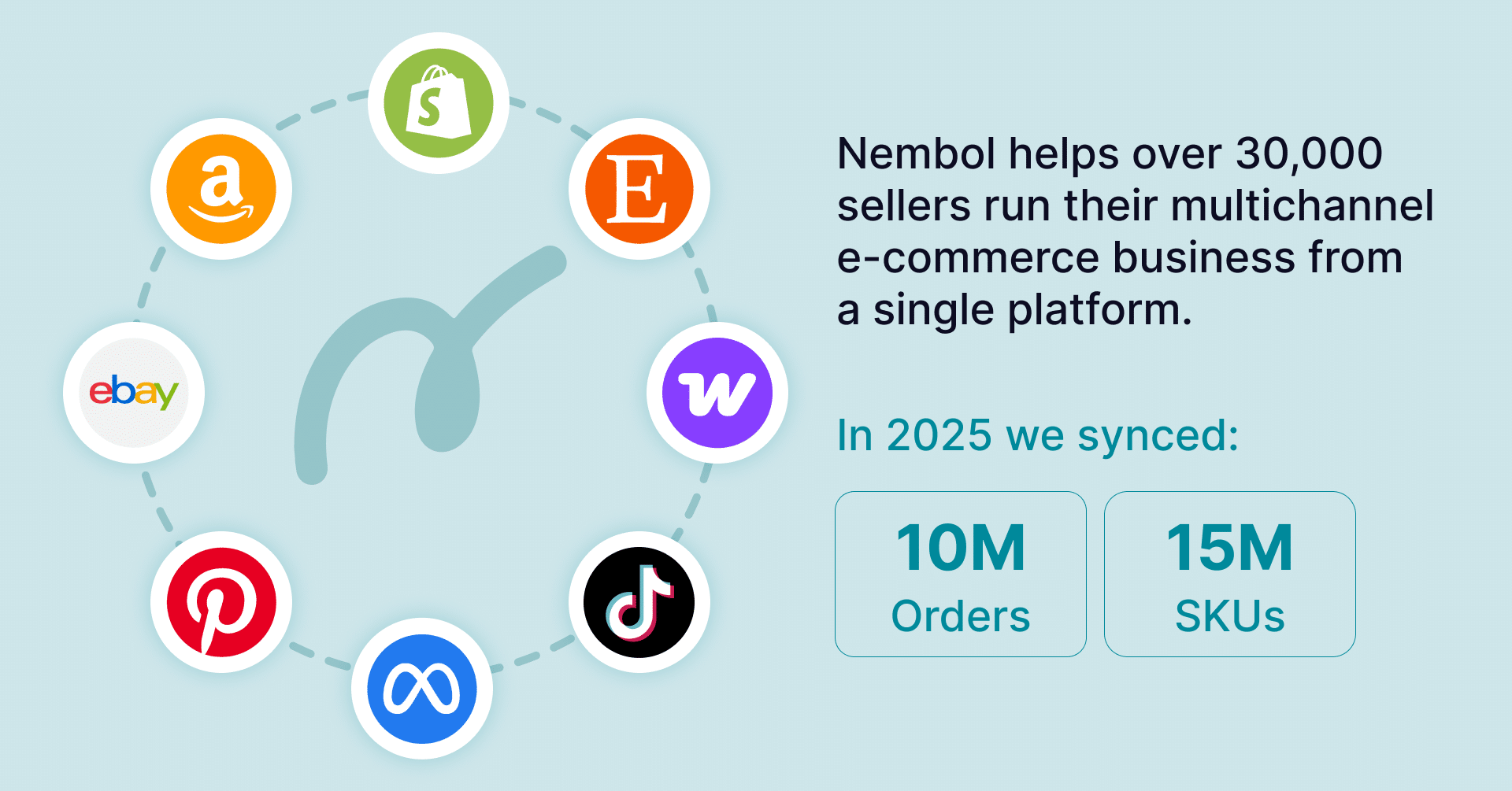
- Reach beyond Meta. The same catalog feeds marketplaces (Amazon, eBay, Etsy, Kaufland, TikTok Shop, OnBuy, Subito.it and Faire, with Temu coming soon), e-commerce platforms (Shopify, WooCommerce, Wix, Squarespace, PrestaShop and Square), and social and advertising channels (Google Merchant Center, Instagram, Facebook Shop, Facebook Page, Pinterest and Tumblr), plus your Nembol Storefront. It all runs on one subscription with 0% commission and unlimited orders.
Facebook Marketplace is outside Nembol’s scope. Nembol concentrates on the catalog, the Shop and catalog ads, which are the Meta surfaces a business can manage at catalog scale.
Frequently asked questions
Is Facebook Shop different from Marketplace?
Yes. A Facebook Shop is a branded storefront on your Page and Instagram profile, built from your product catalog, that sends buyers to your website to pay. Facebook Marketplace is a classifieds venue where people list items one by one and arrange sales through Messenger, often locally. Meta’s commerce rules reflect the split: Shops are reserved for professional sellers, and Marketplace for consumer sellers.
Can I run Facebook catalog ads without a Facebook Shop?
Yes. Advantage+ catalog ads need a catalog and a destination for the click, usually your website, but not a Shop. Many businesses use the catalog only for advertising and add a Shop later for organic discovery on Facebook and Instagram.
Why does my Facebook Shop send customers to a website now?
Between June and August 2025, Meta phased out on-platform checkout for Facebook and Instagram Shops. Products can still be discovered on Meta, but the purchase is completed on the seller’s own website. Sellers without one can generate a site from their existing catalog with Nembol Storefront.
What website can I use for my Facebook Shop if I only sell on marketplaces?
You can point Shop products to your Etsy or eBay listings, but the sale then carries a marketplace fee and the customer stays with the marketplace. Nembol Storefront builds a website from the products you already sell, on your own domain, with Stripe and PayPal checkout. Its stock stays in sync with your marketplaces and your Meta catalog.
Do my Facebook Shop products appear on Facebook Marketplace?
Not automatically. Meta reserves Marketplace for consumer sellers, and the route that once surfaced Shop products there, available only in the United States through on-platform checkout, ended when Meta moved Shops to website checkout in 2025. The exception is eBay’s partner integration, which shows eligible eBay listings on Marketplace in the United States, Germany and France.
Which is better for a small business: a Facebook Shop or Marketplace?
It depends on what you sell. A small business selling new products, with repeat stock and a brand, gets more from a catalog, a Shop and catalog ads, because they scale with the catalog and connect to Instagram. A seller of one-off, second-hand or bulky local items may find Marketplace more productive.