
Overview
Selling on Amazon is often just the first step in building a successful e-commerce business. Once you’ve established traction in your home marketplace, the natural question becomes how to scale further. There are two primary avenues for growth: pursuing a global Amazon strategy or adopting a multichannel strategy beyond Amazon.
A global strategy allows sellers to reach millions of new customers in regions such as Europe, North America, and Asia-Pacific, leveraging Amazon’s international infrastructure to increase visibility, sales, and brand recognition.
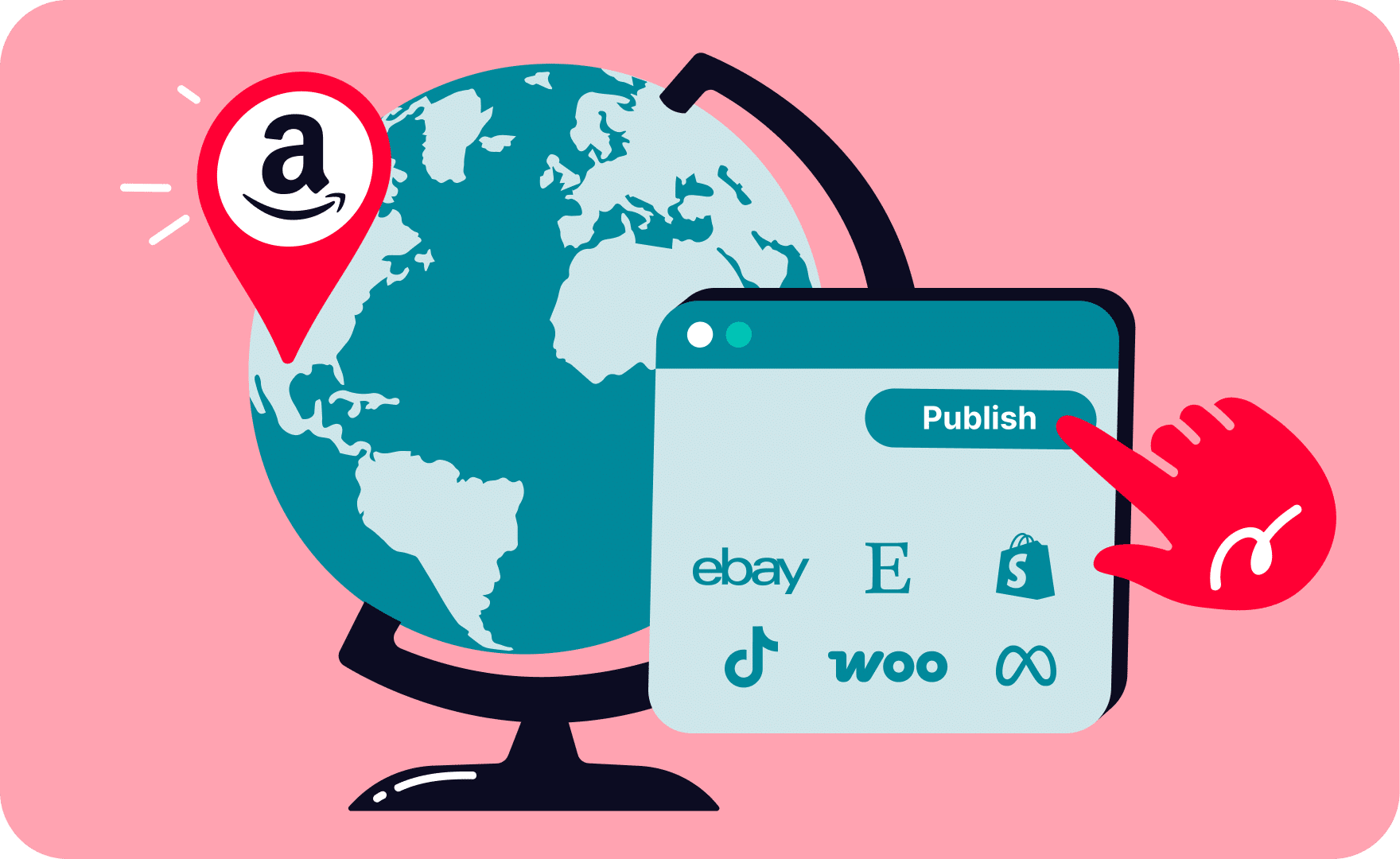
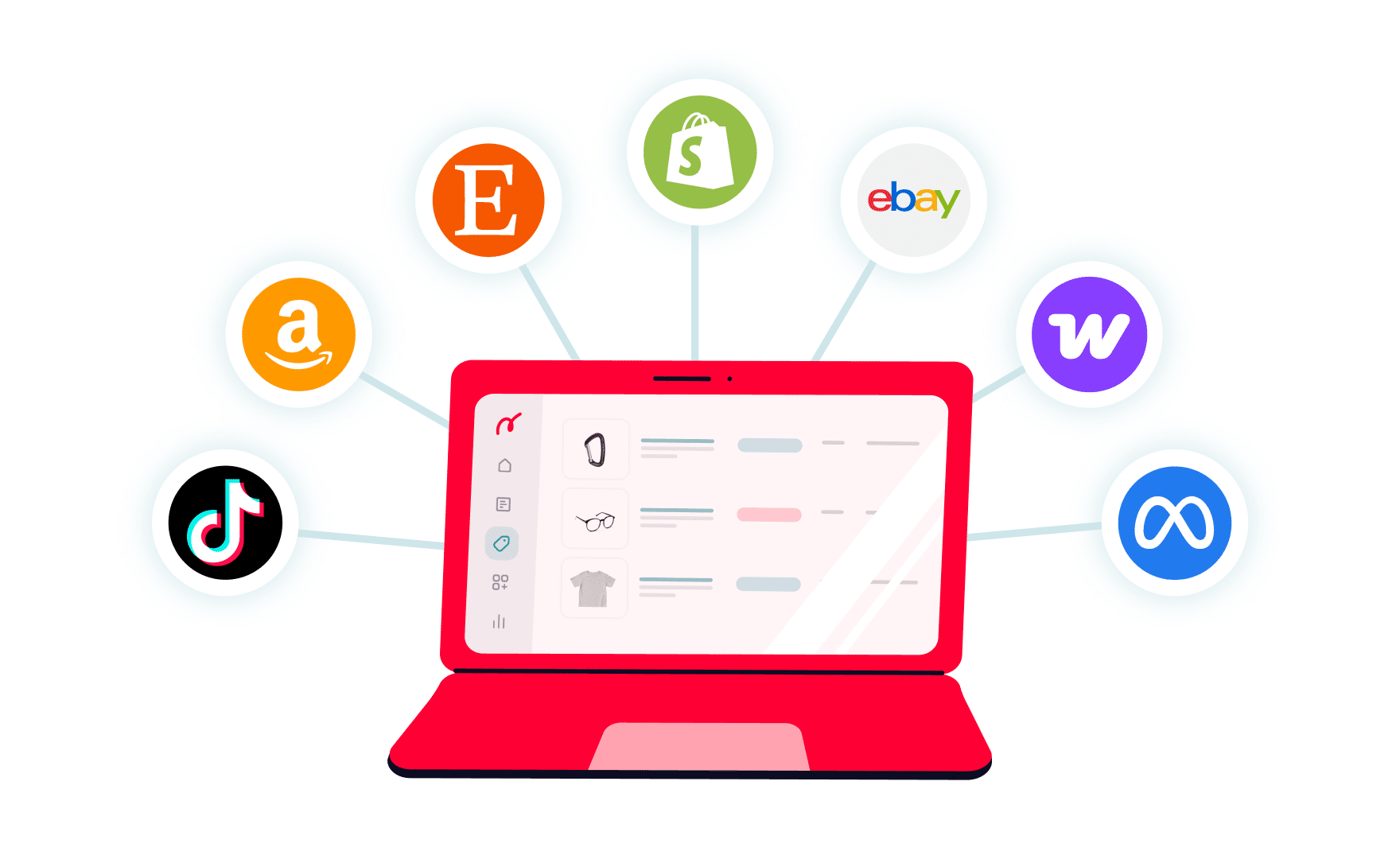
A multichannel strategy, on the other hand, involves listing products on platforms such as eBay, Etsy, Shopify, TikTok, WooCommerce, and Meta Commerce. This approach enables sellers to diversify revenue streams, reduce dependency on a single marketplace, and gain greater control over customer relationships.
Both strategies offer significant opportunities, but each comes with its own operational challenges—from inventory management and pricing strategies to compliance and localization. Successfully navigating these complexities requires a clear strategy, the right tools, and streamlined workflows to minimize errors and maximize efficiency.
Whether the goal is entering new markets or building a more resilient sales ecosystem, understanding the nuances of global versus multichannel strategies is essential for sustainable growth.
Can I have multiple Amazon accounts in different countries?
Amazon’s standard policy is that each seller is allowed only one Seller Central account per region. This rule is in place to maintain marketplace integrity, prevent abuse, and ensure consistent compliance.
However, in specific cases of legitimate business needs, Amazon may permit multiple selling accounts, sometimes even without prior approval. Examples of legitimate business reasons include:
- Operating distinct brands or businesses that require separate listings and branding
- Managing separate legal entities with independent product lines
- Participating in certain Amazon programs that require unique accounts
Amazon allows these exceptions only under strict conditions, and all accounts must remain in good standing. If one account violates policy and is deactivated, it can affect all linked accounts, and the original account must be restored before any secondary account can be reactivated.
Accounts may become associated through shared access, third-party management services, or incomplete ID verification in another marketplace.
To manage international accounts properly, check the countries where your account is registered via the store dropdown in Seller Central and review performance notifications to resolve any issues.
If you no longer wish to sell in a marketplace or no longer control a previously associated account, submit the necessary documentation or request account closure.
Maintaining good standing is essential to avoid suspension across all accounts.
What is Amazon Global Selling
For sellers looking to expand their business beyond their home country, understanding how to reach international customers is the first step. Amazon Global Selling is the framework that enables sellers to offer products on Amazon marketplaces in countries other than their home marketplace.
Instead of opening separate seller accounts for each country, sellers can use a single system to manage product listings, pricing, and fulfillment across multiple international marketplaces.
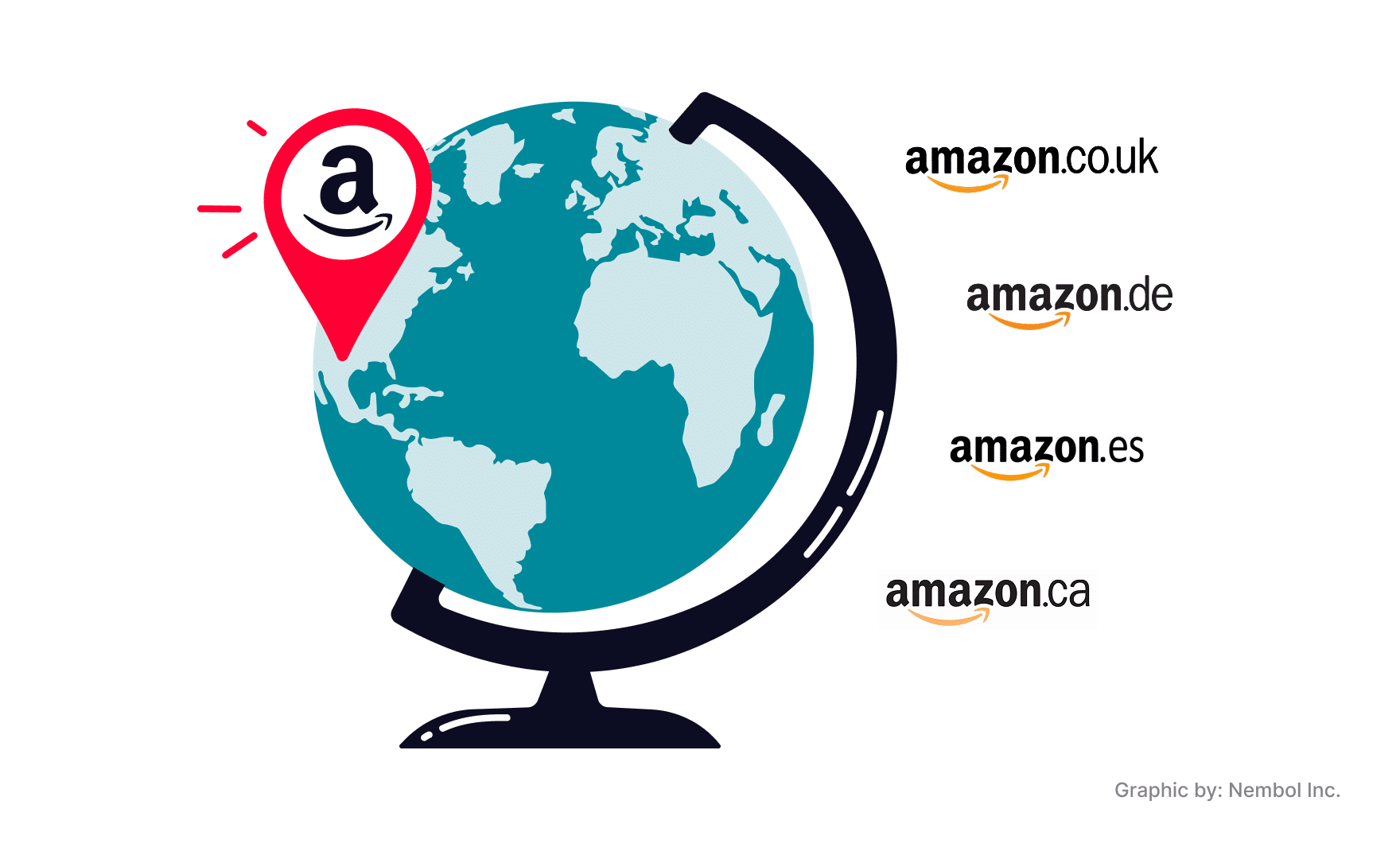
The program covers a wide range of regions, including North America, Europe, Asia-Pacific, and the Middle East, allowing sellers to reach customers in multiple countries from one account.
Sellers can fulfill international orders themselves or use Amazon’s fulfillment services, such as Fulfillment by Amazon (FBA), which handle storage, shipping, and customer service.
Selling internationally requires attention to local regulations, including tax and VAT compliance, and may involve adapting product listings to local languages, measurement units, and marketplace-specific rules.
Why expand internationally on Amazon
Selling in multiple countries opens the possibility to reach new customers, diversify revenue streams, and gain visibility in marketplaces outside your home region.
At the same time, international selling comes with its own set of challenges, including market-specific regulations, pricing strategies, shipping logistics, and tax compliance. Understanding both the potential benefits and the risks is essential to make an informed decision before expanding globally.
What are the benefits of selling internationally on Amazon
Some of the main benefits include:
- Access to a larger customer base: Selling in multiple countries allows you to reach millions of potential customers beyond your domestic market
- Diversification of revenue streams: International sales reduce dependence on a single marketplace and can make revenue more stable
- Increased brand visibility: Products become discoverable in multiple regions, improving global recognition and credibility
- Economies of scale: Selling more units across different marketplaces can optimize inventory management and fulfillment strategies
- Insight into new markets: Exposure to international customer behavior can help refine product offerings and business strategies.
What are the risks of global selling on Amazon
Key risks include:
- Compliance and regulatory challenges: Different countries have specific tax laws, VAT requirements, import/export regulations, and product standards.
- Operational complexity: Managing multiple marketplaces increases the workload for listings, inventory, and fulfillment.
- Localization requirements: Product listings may need translation, conversion to local units, and adaptation to cultural expectations.
- Shipping and logistics risks: International shipping can be more expensive, slower, and subject to customs delays.
- Currency and pricing fluctuations: Exchange rates and local pricing differences can affect profitability and require ongoing monitoring.
The benefits and risks of selling internationally on Amazon are closely linked. While expanding to new markets can increase your customer base, diversify revenue, and improve brand visibility, it also introduces operational, regulatory, and logistical challenges that require careful management.
Evaluating these factors together helps sellers make informed decisions about whether international expansion aligns with their resources, capabilities, and overall business strategy.
Should Amazon sellers expand to multiple platforms?
After exploring the benefits and challenges of selling internationally, many sellers start to consider another strategy for growth: expanding beyond Amazon to multiple sales channels.
This approach allows businesses to reach different customer segments, diversify revenue streams, and experiment with alternative marketplaces without relying solely on Amazon.
Managing multiple platforms introduces new considerations for inventory, pricing, and customer interactions. While it can increase exposure and potential revenue, it also requires careful planning and coordination to ensure operational efficiency and consistency across channels.
Benefits of multichannel selling
Expanding to additional platforms can provide several strategic advantages:
- Diversified revenue streams: Selling on multiple marketplaces spreads risk and reduces reliance on Amazon alone.
- Access to new audiences: Different platforms attract unique customer bases, increasing product visibility and potential sales.
- Greater control over branding and customer experience: Platforms such as Shopify allow sellers to customize product presentation and promotions.
- Flexibility in pricing strategies: Multichannel selling enables sellers to adjust prices per platform to remain competitive and optimize profitability.
- Insights across platforms: Selling on multiple channels provides data on customer behavior that can inform broader business decisions.
- Opportunities for niche or specialized marketplaces: Certain products may perform better on platforms tailored to specific audiences or industries.
Amazon International vs Multichannel: Which strategy is right for you?
By now, it’s clear that both international expansion and multichannel selling offer unique opportunities for growth, but they come with different considerations.
Selling internationally on Amazon allows businesses to reach new countries and millions of potential customers, increasing brand visibility and diversifying revenue streams. At the same time, it requires compliance with local regulations, VAT and tax management, and careful handling of logistics and localization.
Expanding across multiple platforms, on the other hand, gives sellers access to new audiences, reduces dependency on a single marketplace, and provides more control over pricing and branding. However, managing multiple marketplaces introduces operational complexity, from inventory management to order coordination and platform-specific rules.
For many sellers, managing international marketplaces and multiple sales channels simultaneously can be very time-consuming. A third-party app like Nembol is designed to streamline both international and multichannel operations, allowing sellers to manage listings, synchronize inventory, and maintain consistent pricing across multiple marketplaces from a centralized system. By reducing manual work and minimizing errors, Nembol helps sellers focus on growth rather than operational burdens.
Ultimately, the right strategy depends on your business goals, resources, and ability to manage complexity. Whether expanding globally, selling on multiple platforms, or combining both approaches, having the right systems in place can make a significant difference in achieving scalable, sustainable growth.
How to go global on Amazon with Nembol
Expanding internationally on Amazon requires managing multiple marketplaces, localized listings, inventory synchronization, and pricing adjustments. Instead of handling each marketplace separately inside Seller Central, Nembol allows sellers to manage and publish product listings across different Amazon countries from a single dashboard.
Here’s how it works:
- Log in to Nembol
- Go to the Channels tab and click Connect Channels. Select Amazon and start linking all the marketplaces you want to sell in, such as UK, DE, IT, FR, ES, or US. With the Enterprise + plan, you can link up to 10 different accounts.
- Nembol automatically imports your existing product catalog, linking each product to the appropriate marketplaces to maintain consistent listings across all channels. Please make sure your products already have ASINs accepted by Amazon.
- Activate real-time inventory sync so that when a product sells in one marketplace, stock levels are automatically updated across all other connected marketplaces. This prevents overselling and keeps your inventory accurate.
- Set or adjust product prices according to each marketplace. This ensures that pricing is optimized for the local currency, competition, and market conditions, while maintaining profitability.
All from a single and centralized platform!
How to go multichannel with Nembol
Expanding your sales across multiple platforms is an effective way to reach new customers, diversify revenue streams, and grow your business. Setting up a multichannel strategy with Nembol is simple and centralized, allowing you to manage all your marketplaces from one platform.
Here’s how to get started:
- Log in to Nembol
Access your Nembol account and connect your Amazon account (ensure you have a Pro Seller account). Nembol will automatically import your existing catalog. - Connect your other sales channels
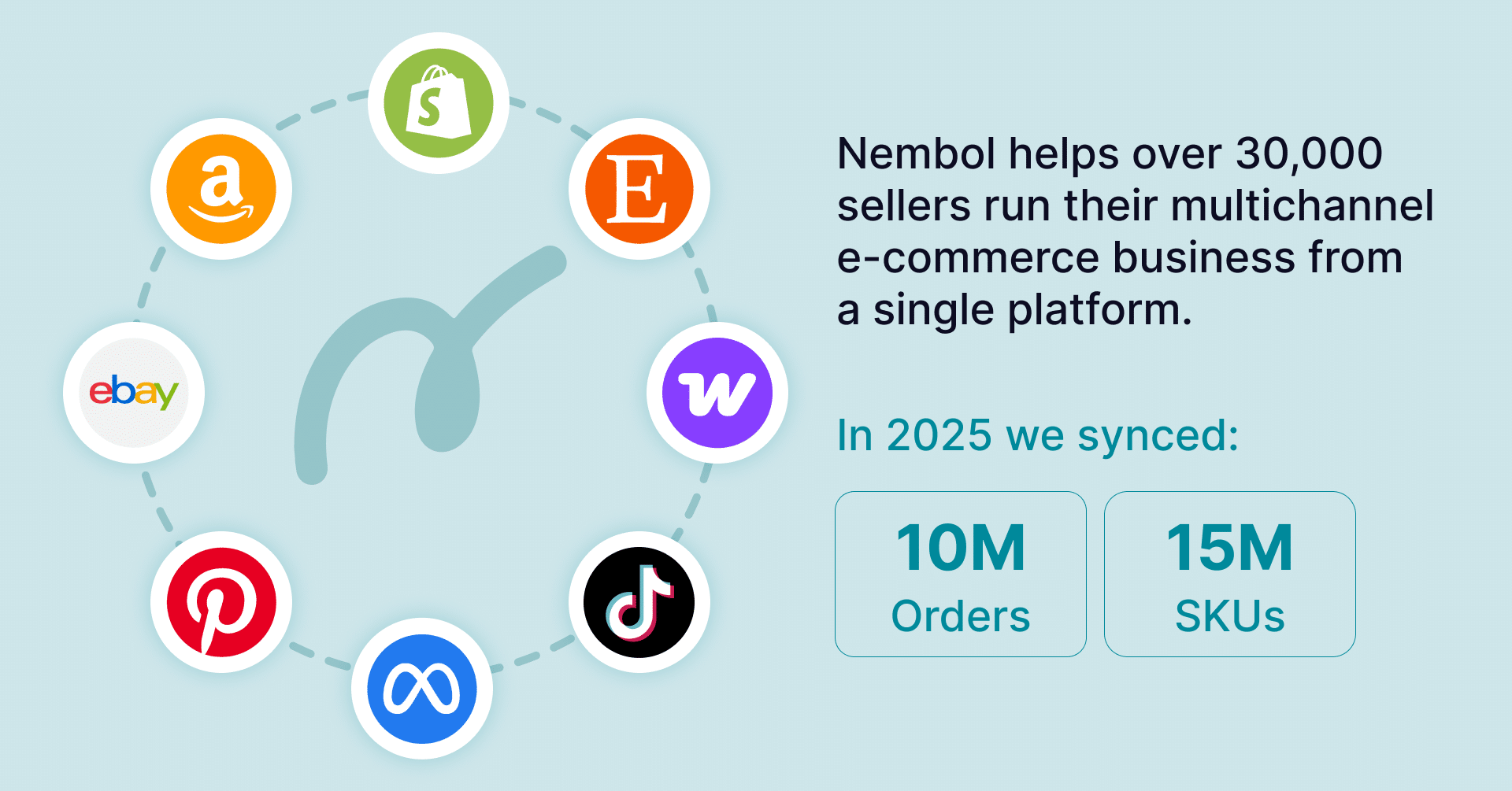
Return to the Channels tab and link your additional platforms. Nembol currently integrates 14 different channels, including marketplaces, e-commerce stores, and social platforms. - Select and publish products
Go to the Products tab, bulk select the items you want to publish on other channels, then click Publish and select the destination channel. - Edit your products directly in Nembol
Make your listing changes and activate Update Products from Nembol for the channels you want to receive these updates. - Enable real-time inventory synchronization
Any sale on one channel is reflected across all connected platforms, keeping stock levels accurate and minimizing the chance of overselling. - Activate Amazon MCF Integration
Nembol can help you transfer your non-Amazon orders to Amazon MCF for fulfillment. This way, you can continue using Amazon as your product hub while gaining new exposure through different websites.
By following these steps, sellers can expand their business to multiple platforms efficiently, keeping listings, inventory, and pricing synchronized.
